



ETA
Endothelin receptor ETA is a G protein-coupled receptor activated by endothelin-1 and endothelin-2, while endothelin-3 has lower affinity for ETA[1]. Mechanistically, ET-1/ETA signaling contributes to vasoconstriction, vascular and cardiac hypertrophy, inflammation, and cardiovascular disease progression[2]. In kidney disease, ETA activation causes sustained afferent arteriolar vasoconstriction, hyperfiltration, podocyte damage, proteinuria, and GFR decline[3]. Compared with ETB, ETA predominates on smooth muscle and mediates many pathophysiological actions of ET-1, whereas endothelial ETB releases vasodilators and clears ET-1[4]. In human coronary studies, endogenous endothelin predominantly via ETA receptor stimulation contributes to basal constrictor tone and endothelial dysfunction[5]. For experimental applications, selective ETA antagonists such as BQ-123 help delineate receptor function, while approved endothelin receptor antagonists include bosentan, macitentan, and ambrisentan[4].
References:
- [1]. Davenport AP, et al. Endothelin. Pharmacol Rev. 2016 Apr;68(2):357-418. [Content Brief]
- [2]. Dhaun N, et al. Endothelins in cardiovascular biology and therapeutics. Nat Rev Cardiol. 2019 Aug;16(8):491-502. [Content Brief]
- [3]. Martínez-Díaz I, et al. Endothelin Receptor Antagonists in Kidney Disease. Int J Mol Sci. 2023 Feb 8;24(4):3427. [Content Brief]
- [4]. Maguire JJ, et al. Endothelin receptors and their antagonists. Semin Nephrol. 2015 Mar;35(2):125-36. [Content Brief]
- [5]. Halcox JP, et al. Endogenous endothelin in human coronary vascular function: differential contribution of endothelin receptor types A and B. Hypertension. 2007 May;49(5):1134-41. [Content Brief]
-
ETA Related Products (45)
Related Products (45)

-
Recombinant Proteins (3)
-
Endothelin 1 (swine, human)
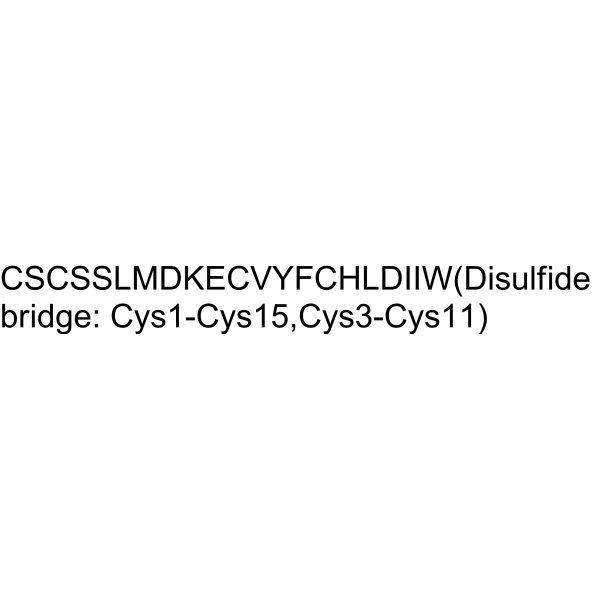 0 ImagesSynonyms: ET-1 (swine, human)Endothelin 1 (swine, human) (ET-1) is a synthetic peptide with the sequence of human and swine Endothelin 1, which is a potent endogenous vasoconstrictor. Endothelin 1 acts through two types of receptors ETA and ETB.
-
Ambrisentan
 0 ImagesSynonyms: BSF 208075; LU 208075Ambrisentan is a selective ET type A receptor (ETAR) antagonist.
-
Macitentan
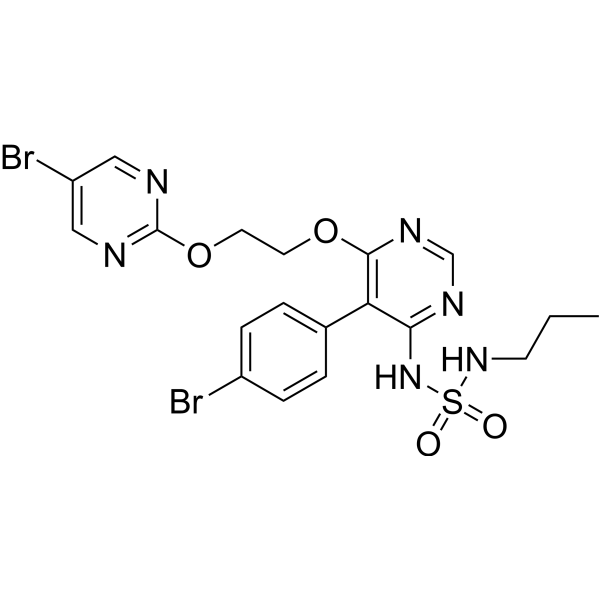 0 ImagesSynonyms: ACT-064992Macitentan (ACT-064992) is an orally active, non-peptide dual ETA and ETB (endothelin receptor) antagonist. Macitentan has the potential for idiopathic pulmonary fibrosis (IPF) and pulmonary arterial hypertension (PAH).
-
Aprocitentan
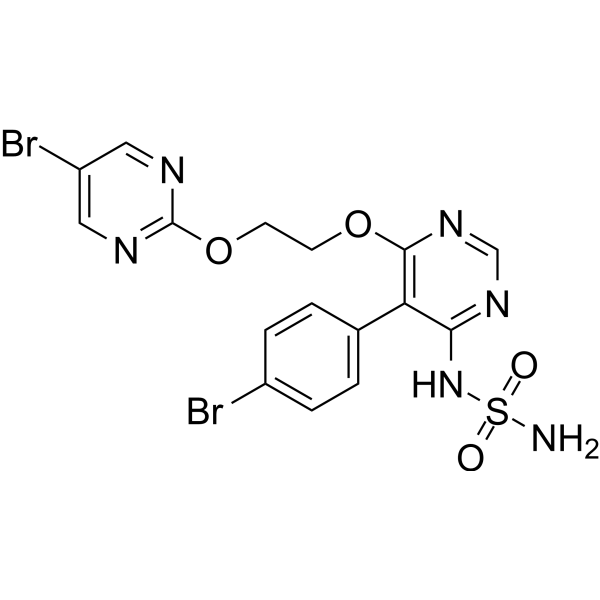 0 ImagesSynonyms: ACT-132577Aprocitentan (ACT-132577) is the major and pharmacologically active metabolite of Macitentan. Aprocitentan is an orally active dual ETA/ETB antagonist with IC50s of 3.4 nM and 987 nM, and pA2 valus of 6.7 and 5.5, respectively. Aprocitentan is an antihypertensive agent.
-
Sitaxsentan sodium
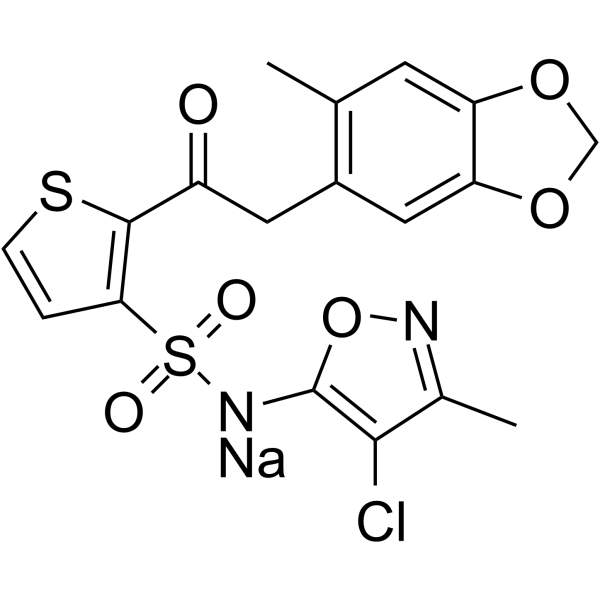 0 ImagesSynonyms: IPI 1040 sodium; TBC11251 sodiumSitaxsentan sodium (IPI 1040 sodium; TBC11251 sodium) is a potent, selective and orally active endothelin A receptor (ETA) antagonist with an IC50 of 1.4 nM and a Ki of 0.43 nM. Sitaxsentan sodium exhibits an IC50 for the ETB receptor of as high as 9800 nM. Sitaxsentan sodium is metabolized by CYP2C9 and CYP3A4, normalizes shunt-induced endothelial abnormalities, restores BMPR signaling, and suppresses pulmonary vascular remodeling and hemodynamic deterioration. Sitaxsentan sodium can be applied in the research of pulmonary arterial hypertension and portopulmonary hypertension.
-
PD151242
 0 ImagesCat. No.: HY-136785CAS No.: 155561-67-4PD151242 is a selective competitive antagonist of the endothelin ETA receptor, with KD values of 0.65 nM, 0.64 nM and 1.92 nM for human, rat and porcine receptors, respectively, and a KD value of 104 μM for the human ETβ receptor. When radiolabeled as [125I]-PD151242, PD151242 can be used to visualize and localize renal vascular ETA receptors.
-
HJP 272
 0 ImagesCat. No.: HY-183141CAS No.: 1072467-37-8HJP 272 is a selective endothelin peptide A (ETA) receptor antagonist with an IC50 of 37.01 nM. . HJP 272 can be used for the researches of pulmonary arterial hypertension, fibrosis, renal failure and cancer.
-
ABT-546 hydrochloride
 0 ImagesCat. No.: HY-19309CAS No.: 223756-43-2Synonyms: A-216546 hydrochlorideABT-546 (A-216546) hydrochloride is an orally active ETA receptor antagonist, with Ki values of 0.46 nM and 13000 nM for human ETA and ETB receptors, respectively, and exhibits >25000-fold selectivity over the ETB receptor. ABT-546 hydrochloride effectively inhibits ET-1 (HY-P0202)-induced phosphoinositide hydrolysis (IC50 = 0.59 nM) and arachidonic acid release (IC50 = 3.03 nM), and antagonizes ET-1-induced contraction in isolated vascular rings. ABT-546 hydrochloride crosses the placental barrier but shows extremely low fetal exposure, with a favorable safety profile. ABT-546 hydrochloride inhibits ET-1-induced pressor response and downregulates the NLRP3/ROS/GSDMD-mediated pyroptosis pathway. ABT-546 hydrochloride can be used for research on abdominal aortic aneurysm.
-
BQ-123
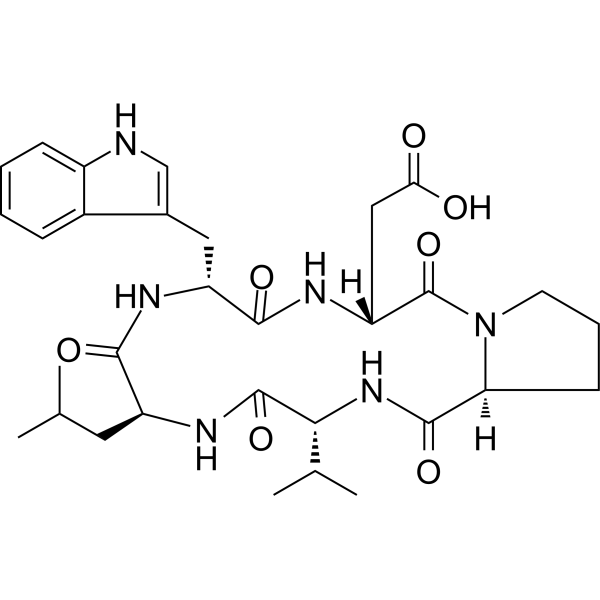 0 ImagesBQ-123 is a potent and selective endothelin A (ETA) receptor antagonist with an IC50 of 7.3 nM and a Ki of 25 nM. BQ-123 inhibits endothelin-1-mediated proliferation of human pulmonary artery smooth muscle cells and lowers blood pressure in different rat models of hypertension.
-
Sulfisoxazole
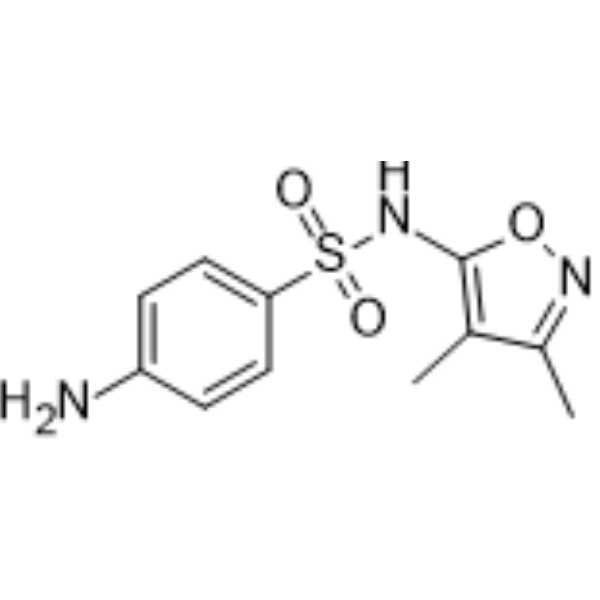 0 ImagesSulfisoxazole (Sulfafurazole) is an orally active endothelin receptor antagonist with IC50 values of 0.60 μM and 22 μM against endothelin receptor A and endothelin receptor B, respectively. Sulfisoxazole is a sulfonamide antibacterial agent with an oxazole substituent. Sulfisoxazole inhibits breast cancer exosome release by targeting endothelin receptor A.
-
Zibotentan
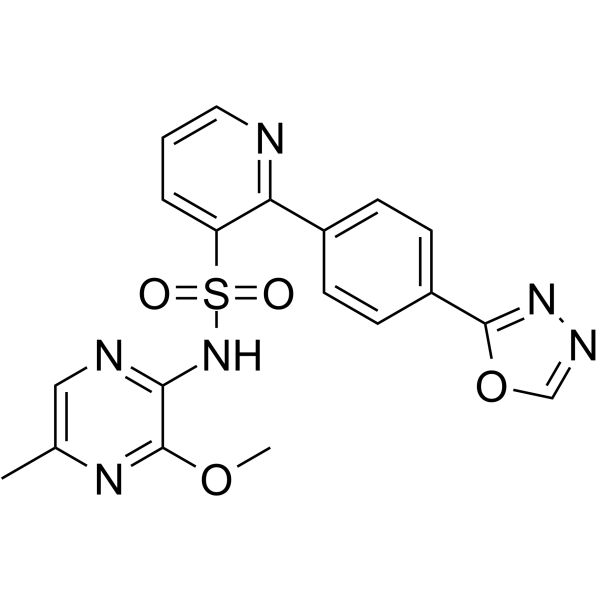 0 ImagesSynonyms: ZD4054Zibotentan (ZD4054) is a potent, selective and orally active endothelin A (ETA) receptor antagonist with a Ki of 13 nM. Zibotentan has no inhibitory effect on ETB. Zibotentan has anticancer effects and can be used for castration-resistant prostate cancer (CRPC) research.
-
Tezosentan
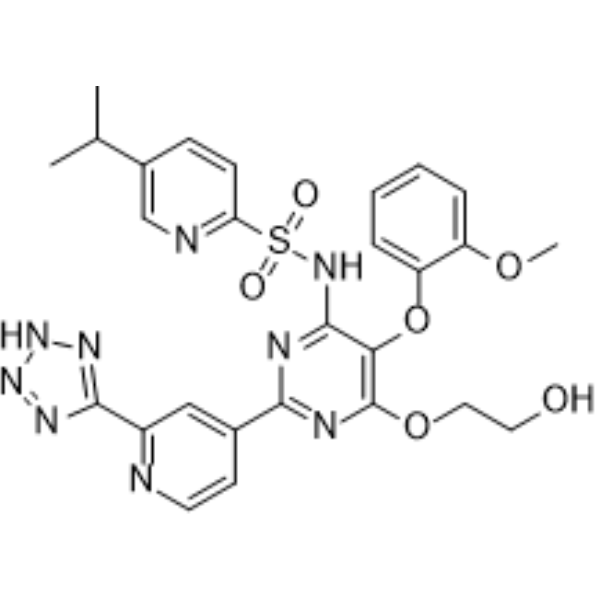 0 ImagesSynonyms: RO 610612Tezosentan (RO 610612) is an endothelin (ET) receptor antagonist, with pA2s of 9.5, 7.7 for ETA and ETB receptors, respectively.
-
IRL 2500
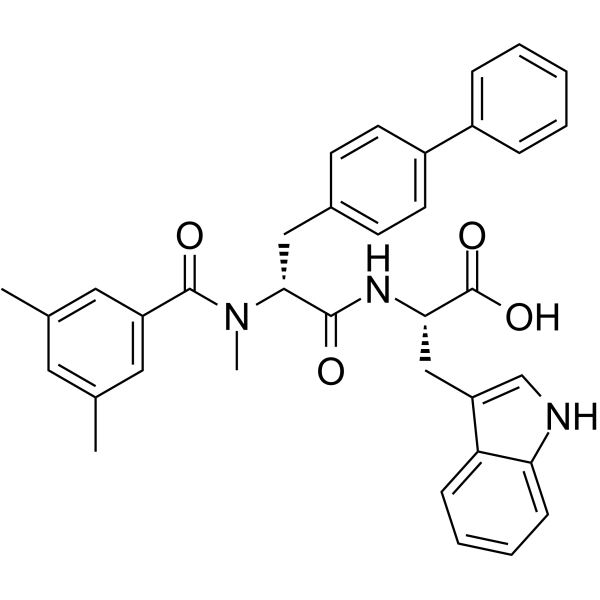 0 ImagesIRL 2500 is a potent Endothelin receptor antagonist. IRL 2500 shows IC50 values of 1.3 and 94 nM for ETB and ETA receptors, respectively. IRL 2500 inhibits ETB receptor-mediated blood pressure increase and renal vascular resistance in rats in vivo.
-
A-192621
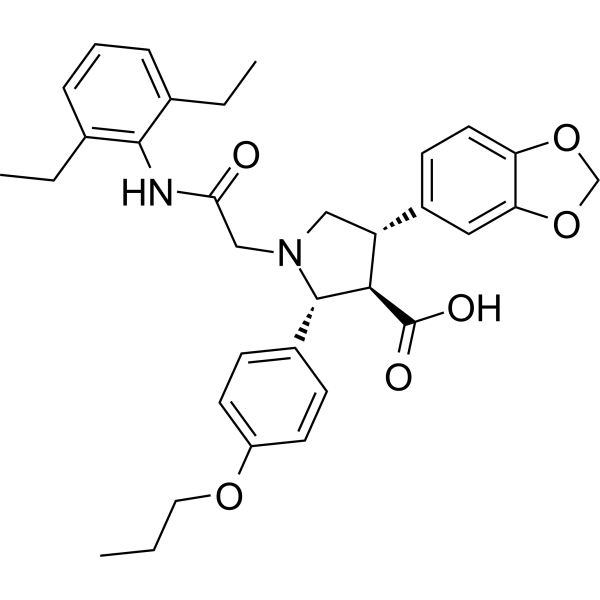 0 ImagesA-192621, a chemical probe, is a potent, nonpeptide, orally active and selective endothelin B (ETB) receptor antagonist with an IC50 of 4.5 nM and a Ki of 8.8 nM. The selectivity of A-192621 is 636-fold higher than ETA (IC50 of 4280 nM and Ki of 5600 nM). A-192621 promotes apoptosis in PASMCs. A-192621 alos causes elevation of arterial blood pressure and an elevation in the plasma ET-1 level.
-
Macitentan-d4
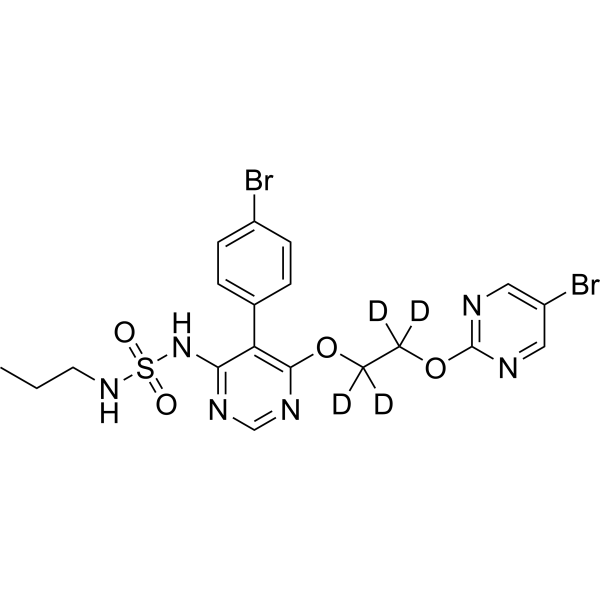 0 ImagesSynonyms: ACT-064992-d4Macitentan-d4 is a deuterium labeled Sulfamethoxazole. Macitentan is an orally active, non-peptide dual ETA and ETB (endothelin) receptor antagonist. Macitentan has the potential for idiopathic pulmonary fibrosis (IPF) and pulmonary arterial hypertension (PAH).
-
Aprocitentan-d4
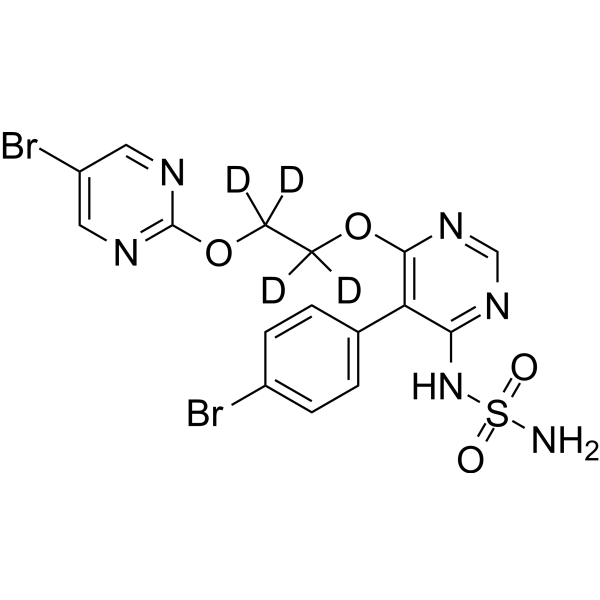 0 ImagesSynonyms: ACT-132577-d4Aprocitentan-d4 is a deuterium labeled Aprocitentan. Aprocitentan is a major and pharmacologically active metabolite of Macitentan. Aprocitentan is an orally active dual ETA/ETB antagonist with IC50s of 3.4 nM and 987 nM, and pA2 valus of 6.7 and 5.5, respectively. Aprocitentan is an antihypertensive agent.
-
Sarafotoxin S6a
 0 ImagesSarafotoxin S6a, a sarafotoxin analogue, is a endothelin receptor agonist and has an ETA/ETB selectivity profile similar to that of Endothelin-3 (HY-P0204). Sarafotoxin S6a elicits the pig coronary artery with an EC50 value of 7.5 nM.
-
BMS 182874
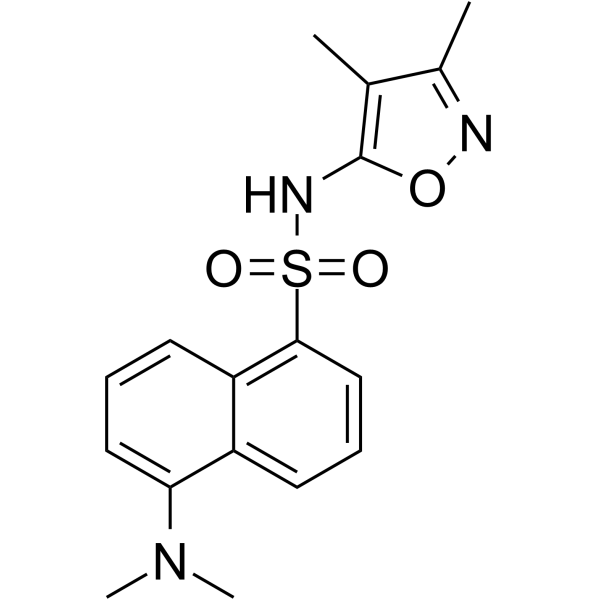 0 ImagesBMS 182874 is an orallyactive, highly selective endothelin receptor (ETA receptor) antagonist, with IC50 value of 0.150 μM, Ki of 0.055 μM. BMS 182874 reduces the arterial pressure of Deoxycorticosterone acetate (HY-B1472) induced hypertension model in rats, and can be used for cardiovascular disease research.
-
Ro 46-8443
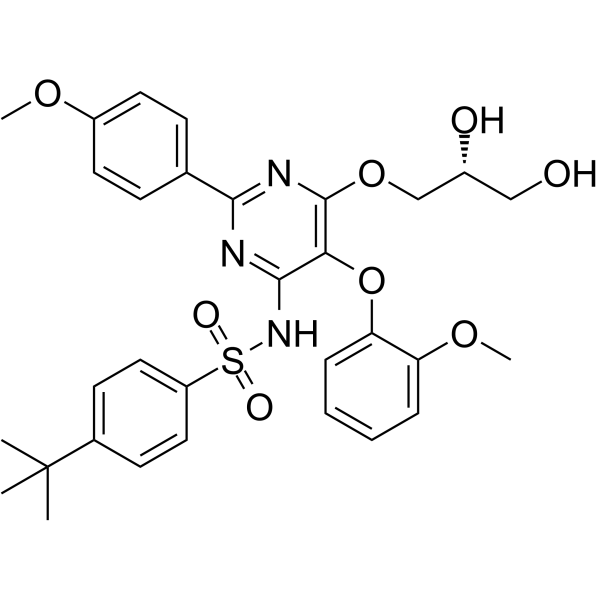 0 ImagesRo 46-8443 is the first non-peptide endothelin ETB receptor selective antagonist. Ro 46-8443 displays an at least 100-fold selectivity for ETB (IC50: 34-69 nM) over ETA receptors (IC50: 6800 nM).
-
Avosentan
 0 ImagesSynonyms: Ro 67-0565; SPP-301Avosentan (Ro 67-0565; SPP-301) is an orally active endothelin (ETA) receptor antagonist. Avosentan can block the ETA receptor, thereby reducing vascular contraction and exerting a renal protective effect. Avosentan inhibits vascular contraction caused by ET-1 and alleviates the reduction in retinal and optic nerve head blood flow induced by it, lowering intraocular pressure in the glaucoma monkey model. Avosentan non-specifically blocks ETB receptors at high doses, inhibiting ETB-mediated diuresis and natriuresis, and may cause fluid retention. Avosentan can be used to reduce proteinuria with diabetic nephropathy, but induces significant fluid overload and congestive heart failure.




